
How Robots Will Power the Future of Space Mining

When you picture mining, you probably imagine people in hard hats, heavy machines, and lots of dirt and dust. But in space, things are going to look very different.
Instead of human miners swinging tools or operating giant drills, the future of space mining will likely belong to robots — smart, self-sufficient machines designed to do the hard work where humans can’t.
Space is harsh. It’s freezing cold, airless, and full of radiation. Sending people to mine asteroids or the Moon is risky and expensive. But sending machines that don’t need air, food, or breaks? That’s the plan. So, let’s check out what it could look like.
Why Robots Are the Key to Space Mining
The idea of space mining — harvesting resources like metals, water ice, and rare gases from asteroids or the Moon — has been gaining ground for years. But the reality is, mining in space is nothing like mining on Earth.
No gravity (or very low gravity), no atmosphere, and extreme temperatures make human labor nearly impossible out there. Even the simple act of digging or anchoring machinery becomes a huge challenge when there’s no weight to hold things in place.
That’s why robots are at the center of almost every serious plan for mining in space. They can handle tasks in environments where humans would struggle to survive. They can work non-stop. And they can be built specifically for the weird physics of low-gravity mining.
Without robots, space mining wouldn’t just be difficult — it would be nearly impossible.
What Kind of Robots Are We Talking About?
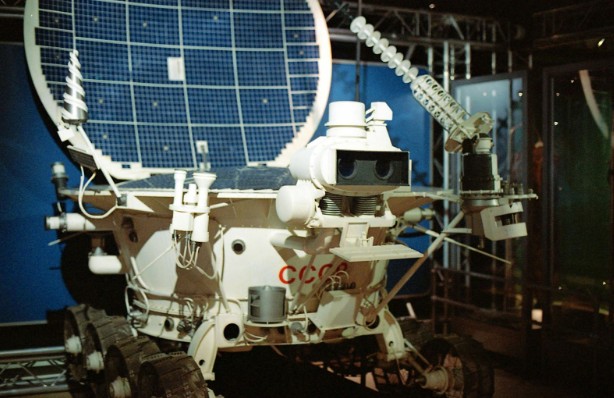
When we say “robots,” we’re not just talking about humanoid droids like in the movies (though that sounds cool); the machines being developed for space mining are purpose-built, often looking more like rovers, cranes, or automated arms than anything human-shaped.
Here are some of the key types of robots that could power future mining missions:
1. Prospecting Robots
These are the scouts — small robotic explorers designed to search for valuable resources. They can map the surface of asteroids or the Moon, use sensors to detect metals or ice beneath the surface, and send data back to mission control. Some might even dig small test pits or take core samples to check what’s below the top layer.
2. Mining Rovers
Mining rovers are built to do the heavy lifting (or digging, in this case). They might carry drills, scoops, or other tools to break up rock and extract useful materials. Their design often includes tracks or legs that help them stay stable on uneven or low-gravity terrain.
3. Material Collectors and Transporters
Once resources are dug up, they need to be collected and moved. Specialized robots could gather the mined materials and transport them to a central processing area — maybe to a nearby space station, or even to an orbiting refinery.
4. Processing Units
In some cases, robots might not just dig — they might also help process the materials on-site. For example, they could separate metals from rock or extract oxygen from lunar soil. Processing in space reduces the amount of raw material that needs to be shipped back to Earth, making the whole operation more efficient.
Automation and AI: The Brains Behind the Machines
It’s not just about building tough machines — it’s about making them smart enough to work mostly on their own.
Space mining robots will rely on automation, sensors, and artificial intelligence to make decisions without constant instructions from Earth. This is important because signals between Earth and space can take minutes (or longer) to travel back and forth. That kind of delay doesn’t work if you need real-time control.
Instead, robots will need to:
- Navigate tricky landscapes by themselves
- Identify the best spots to mine.
- Adjust their approach when conditions change.
- Communicate with other machines in the system.
Think of it as sending out a team of robot workers who can not only follow a plan but also react when something unexpected happens, like a jammed drill or unstable ground.
Why Not Just Send Humans?
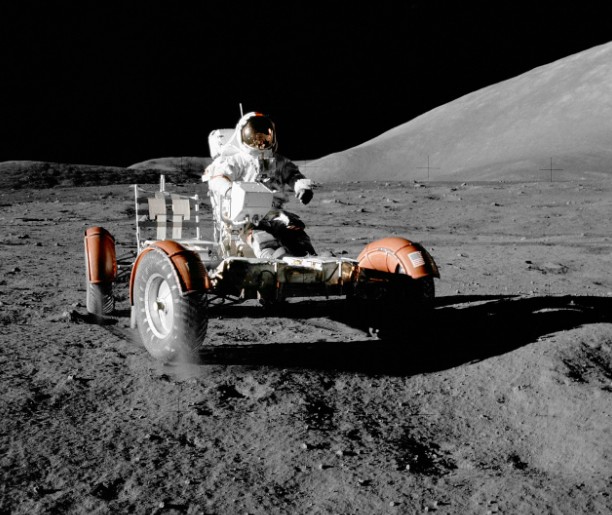
The simple answer: it’s dangerous and expensive.
Mining is already risky on Earth. In space, the risks go through the roof — radiation exposure, extreme temperatures, lack of oxygen, and the possibility of equipment failure far from help.
Robots, on the other hand, don’t care about any of that. They don’t need life support systems. They can work in places that would kill a human instantly. And if something goes wrong, the mission loses hardware, not lives.
That doesn’t mean humans will be completely out of the picture. People might still oversee operations from a safe distance — maybe from a lunar base or an orbiting spacecraft — but the day-to-day labor will almost certainly be robotic.
How Close Is This to Reality?
While we haven’t seen full-scale robotic mining in space yet, the technology is getting closer.
NASA’s VIPER rover (planned for a Moon mission) will explore lunar ice deposits and test out mining technologies. And the OSIRIS-REx mission showed that we can send spacecraft to an asteroid, take samples, and bring them back successfully.
Also, private companies like TransAstra and Asteroid Mining Corporation are actively working on robotic mining concepts and equipment.
Plus, the rapid development of robotics, automation, and AI here on Earth keeps improving the tools we can use in space.
It’s no longer a question of “if” we can build mining robots — it’s a matter of when they’ll be ready for full deployment.
The Robotic Workforce of the Space Age
The future of mining in space doesn’t look like pickaxes and shovels. It looks like smart, adaptable machines working together in the harshest environments imaginable.
Robots will make it possible to reach places we can’t, handle tasks we shouldn’t, and keep operations running even when conditions are tough. Without them, the dream of space mining would stay just that — a dream. But with them? The doors are wide open.
So, the next big gold rush might not be powered by human hands. The steady, tireless work of machines might just power it.
